A Living Laboratory for Climate & Health: Lessons from the Island of Chincoteague
Meghan Craig, (MS-CEH‘27)
The Island of Chincoteague, VA serves as the perfect example of the complex problems that students of Georgetown’s MS in Climate, Environment and Health (CEH) are trained to address. The key feature of an immersive study tour during the program’s August Summer Intensive, students visited the island as a part of Professor Jessica Krtiz’s course, “Resolving Complex Problems.” In the classroom-portion of the course, we learned about a variety of theoretical frameworks that can be applied to complex problems in the fields of environmental science and health. On the island, we saw how these frameworks are practically utilized in the real world.
3 Interconnected Challenges
Situated off the shores of Virginia, we only needed to travel about 4 hours to become completely immersed in several challenges that lie at the intersection between the environment and public health. The residents of Chincoteague are currently facing 3 challenges simultaneously. Climate change is increasing the frequency and intensity of storm surges, causing beach erosion to be rapidly accelerated and overwash events to become more common. In addition to this, residents are also commonly subject to septic tank failures on the island, leading to soil and water contamination. This water contamination is also exacerbated by the presence of PFAS in the water supply from a nearby federal facility.
Situated off the shores of Virginia, we only needed to travel about 4 hours to become completely immersed in several challenges that lie at the intersection between the environment and public health.
When driving to the island, just before we crossed the bridge from the mainland, we saw the home-base of one of our key stakeholders for the first time: the NASA Wallops Flight Facility. For many years, the flight facility was unintentionally polluting the water supply of Chincoteague residents with per- and poly-fluoroalkyl substances, more commonly known as PFAS. PFAS are prevalent in many industries, including in non-stick cookware, packaging and cosmetics but in this specific case study, PFAS were present in the firefighting foam used by the NASA Wallops facility. In recent years, some types of PFAS have been classified as a human carcinogen. Therefore, remediation of the Town of Chincoteague’s water supply is critical to ensure the safety of its residents.
Seeing the Environmental & Public Health Challenges from Multiple Perspectives
Our trip took place over the course of three days. On Day 1, we met with stakeholders from the National Fish and Wildlife Service to discuss their decision to relocate their public beach due to increased storm and overwash events as a consequence of climate change. We then spoke with the owner of a local aquafarm to discuss the impacts of septic tank failure and subsequent water pollution on his business. The day ended with a special Chincoteague Town Council meeting, where NASA stakeholders were present. At this meeting, we heard from NASA about what their remediation plans looked like and entailed, and we were also able to hear the perspectives of the affected community on the matter.
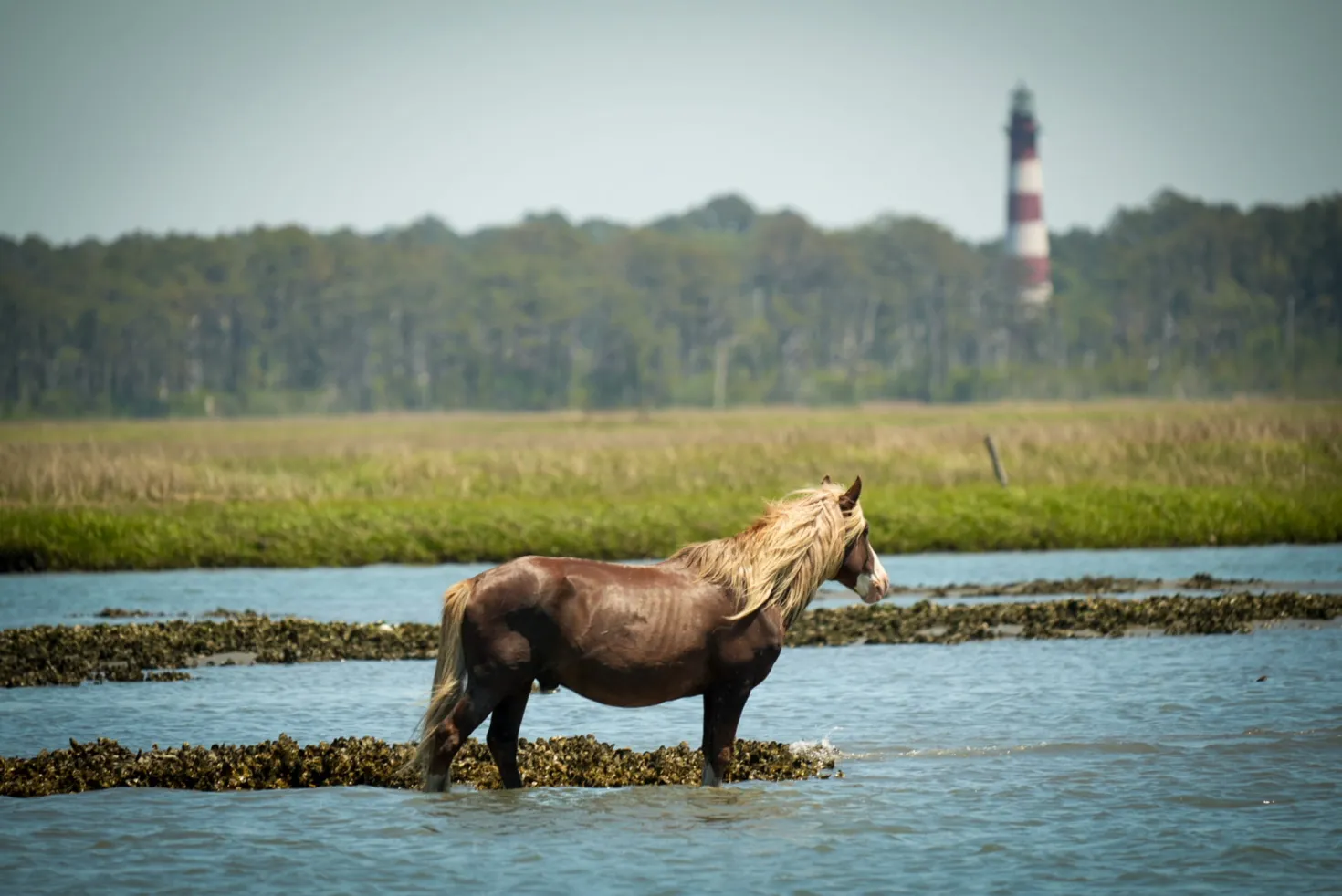
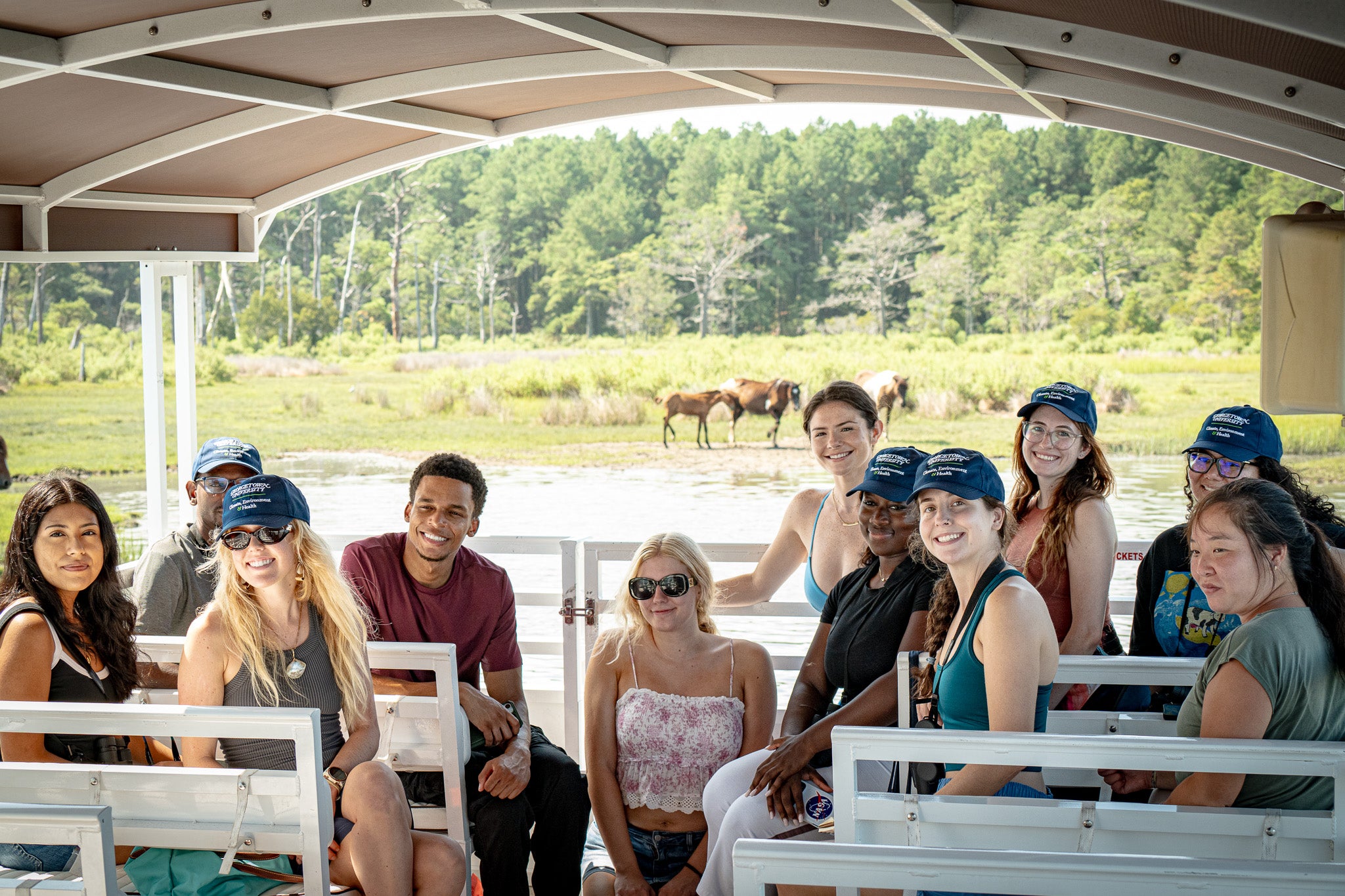
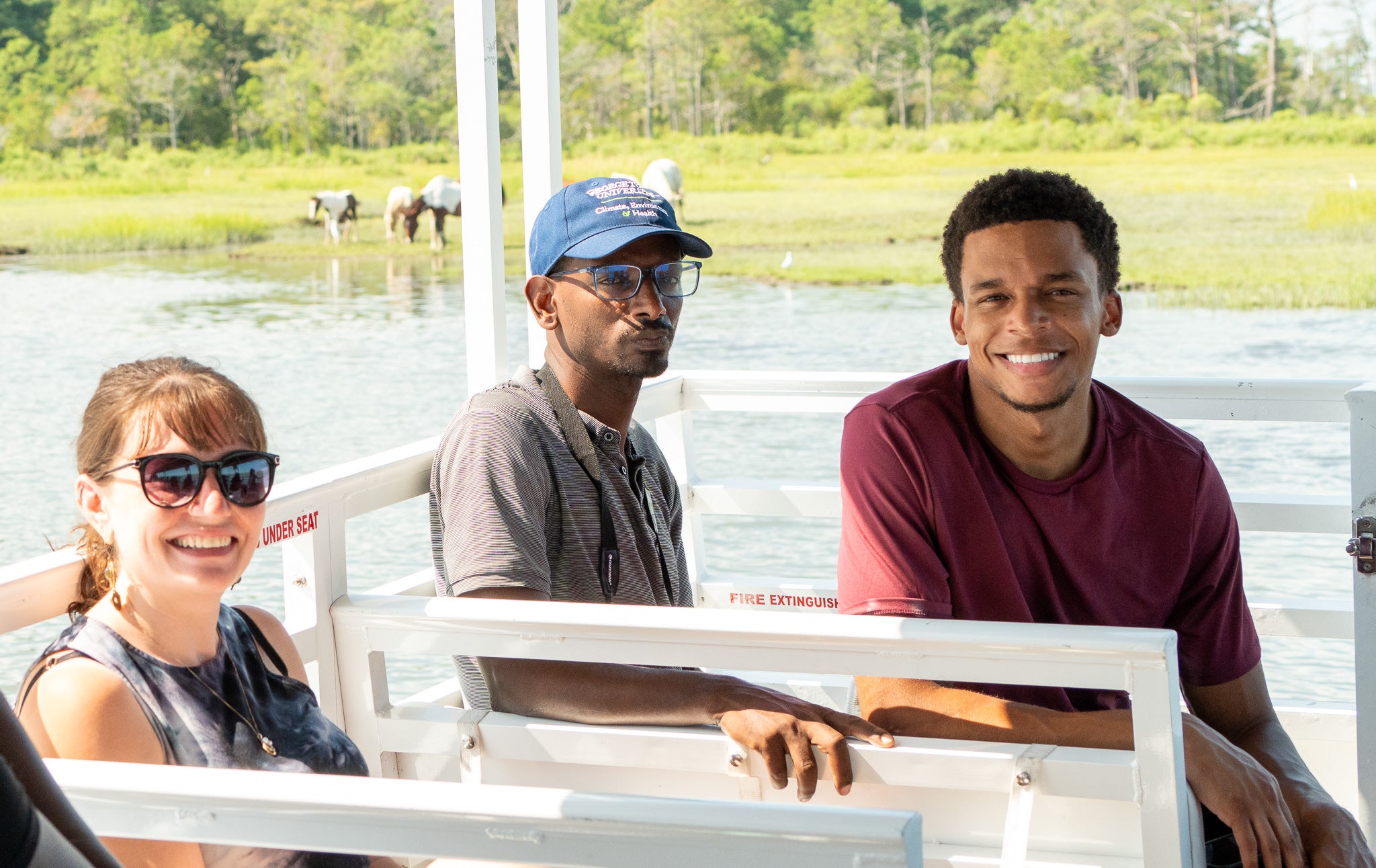
We made a special stop on our eco-boat tour to see the iconic Chincoteague ponies that graze along Assateague Island, part of which is within the Chincoteague National Wildlife Refuge. Photo: Saltwater Pony Tours
Slide2 of 3
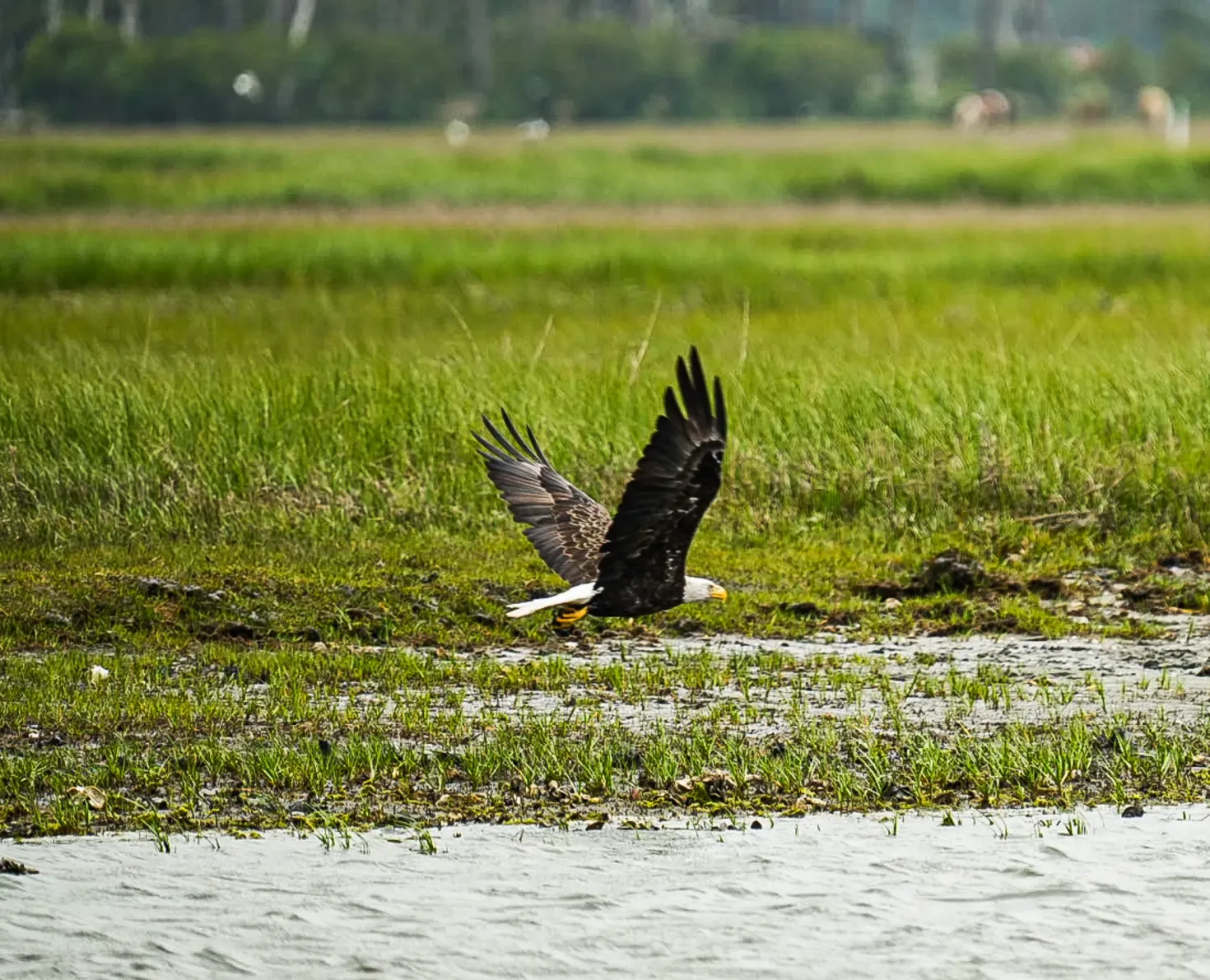
Bald eagles, once at the brink of extinction, hunt in the Chincoteague marshland. We took a boat tour into the refuge of Assateague Island, part of which is within the Chincoteague National Wildlife Refuge. Photo: Saltwater Pony Tours
Slide3 of 3
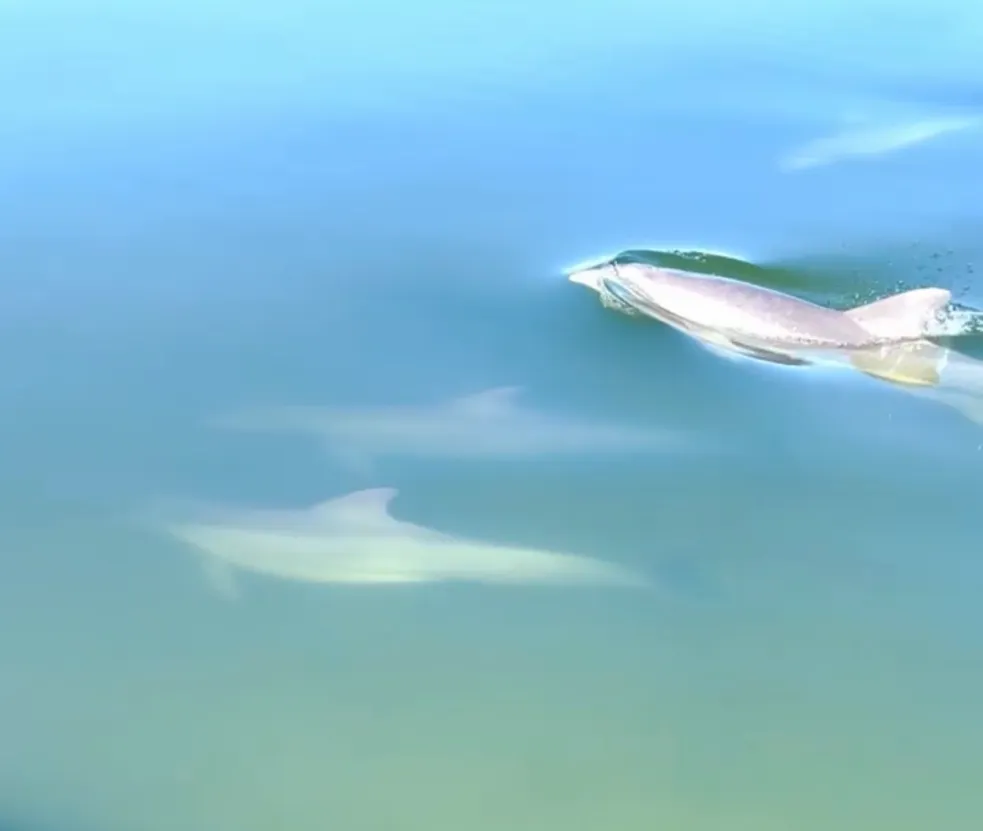
On the eco-boat tour portion of the field intensive, we explore how human and environmental health are interconnected as they observe marine wildlife. Photo: Saltwater Pony Tours
End of carousel collection.
Fallout From a Rapidly Changing Shoreline
Day 2 consisted of a boat tour around the island, where we had the chance to see the physical changes of the shoreline from flooding and erosion. On the tour, I was struck by the fact that we could see the remnants of stilts that a house on the island once sat on. These stilts were now located in the middle of the bay, a few yards away from where the shoreline currently sits. After the boat tour, we were given the opportunity to meet with a representative from the Virginia Department of Health’s Eastern Shore Health District, who spoke with us about how contamination from and exposure to waste from the failures of septic systems impacts human health.
Understanding Climate & Contamination Solutions on the Ground
The final day of our trip started with a meeting with the Town of Chincoteague’s Town Manager and an employee from Environmental Systems Service, a company that is being contracted to install more efficient septic systems on the island. Here, we learned the wastewater filtration process and got to walk through the step-by-step process of how package sewage treatment systems function. Our final stop before heading back to Washington, DC was the NASA Wallops Flight Facility itself.
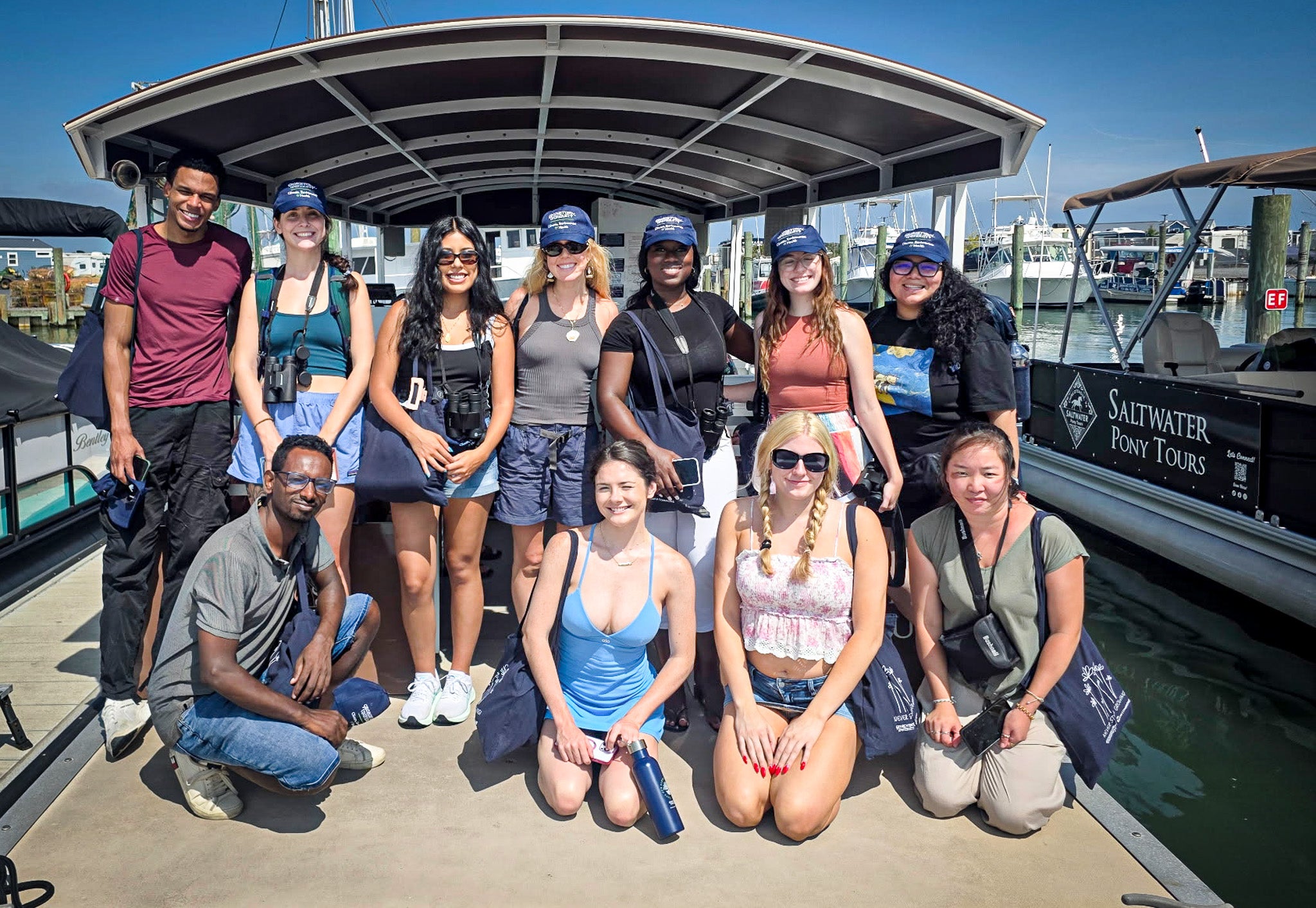
The MS in Climate, Environment & Health 2027 cohort visits the saltwater ponies on the island of Chincoteague. Photo: Saltwater Pony Tours.
Slide2 of 2
The MS in Climate, Environment & Health 2027 cohort visits the saltwater ponies on the island of Chincoteague. Photo: Saltwater Pony Tours.
End of carousel collection.
Taking the Lessons Beyond Chincoteague
In my opinion, this was the perfect start to my 10-month program here at Georgetown. I had the unique opportunity to be immediately immersed in the field, which for me was a much more rewarding and enlightening experience than being in the classroom for an entire semester. The study tour allowed my cohort to use the frameworks from our classroom setting and apply them to multiple examples in the field at once. Within this course, Professor Kritz had us identify our positionality and skills to develop a personal toolkit that we will now be able to take with us throughout our time in the program and beyond to truly place ourselves at the intersection of the climate crisis and public health to work towards making a difference. The Chincoteague study tour was an amazing experience that I definitely won’t forget.
Climate, Environment & Health Stories
Hear from MS-CEH students and faculty working at the intersection of these critical issues.